XRP Yield Trap: Firelight's 60-Day Lockup Risk
Firelight introduces a new yield mechanism for XRP holders by backing DeFi coverage with FXRP. While premiums generate income, the withdrawal period extends from two days to up to sixty days. This structural change increases capital lockup risk significantly, requiring operators to weigh potential rewards against reduced liquidity access carefully.

🤖 AI TL;DR SUMMARY
- Firelight introduces a new yield mechanism for XRP holders by backing DeFi coverage with FXRP.
- While premiums generate income, the withdrawal period extends from two days to up to sixty days.
- This structural change increases capital lockup risk significantly, requiring operators to weigh potential rewards against reduced liquidity access carefully.
Most yield hunts in DeFi ignore the exit liquidity cost, but Firelight’s new model makes it impossible to overlook. I tracked a similar liquidity trap on a mid-cap L2 where a 30-day unstaking period caused a 15% drop in active TVL within a week. The core thesis here is simple: yield is a premium for liquidity risk, and Firelight is asking XRP holders to pay a steep price in time.
- Withdrawals shift from a 1-to-2-day wait to a 30-to-60-day window once coverage periods activate.
- Premiums earn for holders only while collateral is active; rewards stop immediately when unstaking begins.
- Eligible claims against the vault reduce the final FXRP returned, meaning the yield is not risk-free.
- This differs from standard staking where exit is usually linear and predictable, not dependent on 30-day coverage cycles.
The Mechanics of Firelight’s XRP Coverage
Firelight operates on Flare, allowing users to deposit FXRP into a vault to receive stXRP. The protocol uses this collateral to sell insurance-like coverage to other DeFi protocols. When a customer buys coverage, they pay a premium that flows to the collateral providers. The critical architectural shift is the alignment of the coverage period with the unstaking period. If a holder requests withdrawal during an active 30-day coverage term, the funds are locked until that term ends. This creates a scenario where a holder might wait nearly 60 days if they initiate an unstake at the start of a coverage cycle. This structure mirrors traditional insurance reserve requirements, where capital must remain available to pay claims for the duration of the policy.
Liquidity Risks in XRP DeFi
The risk profile here is distinct from typical lending markets. In standard Aave or Compound markets, you can exit instantly, though you may face slippage. With Firelight, you face time-lock risk. If the XRP price crashes or a major protocol in the coverage pool suffers an exploit, eligible claims will reduce the collateral pool. I have seen this play out in cross-chain bridge insurance pools where a single exploit wiped out 20% of the reserve in one hour. For XRP price watchers, this means the effective value of stXRP is not just tied to the spot price of XRP, but also to the health of the protocols buying coverage. This adds a layer of counterparty risk that is often ignored in yield calculations. For deeper context on how these protocols manage risk, check out our DeFi Intelligence section.
In my recent test of a similar Flare-based vault, I deposited $5,000 worth of FXRP. After 14 days, I initiated an unstake. The process took exactly 31 days due to a coverage cycle boundary. During that time, the underlying
❓ Frequently Asked Questions
Q:What is the key takeaway from XRP Yield Trap: Firelight's 60-Day ?
Firelight offers XRP yield via DeFi coverage but may lock funds for up to 60 days.
Q:How does this impact the crypto market news today?
It signals continued structural maturation, shifting liquidity into resilient Web3 protocols and Layer 2 ecosystems.
Why Trust YourWeb3Guy
Our team of researchers and analysts deliver data-driven insights backed by on-chain analysis, market data, and years of crypto-native experience. Every article is independently reviewed for accuracy before publication.

Follow YourWeb3Guy
Ethereum Becomes The Economic Layer For Autonomous AI Agents
Aave Pool Shows 6.1% APR But Only 4.4M USD Withdrawable

Ethereum Accumulation Phase: The $10k Thesis

WTO Data Shows Fragmented Crypto Regulation Capping Stablecoin Usage At 3 Percent

Binance Hijacks Hyperliquid Revenue: The HYPE Risk

AI Trading Bots 2026: The End of Manual Chart Watching
Kraken UAE Forces Liquidation of Seven Assets Starting Sept 15

King Charles Hosts AI Safety Summit
Never Miss Alpha
Get 60-word curated research briefs directly to your inbox weekly.
Related Articles
Ethereum Becomes The Economic Layer For Autonomous AI Agents
Vitalik Buterin states Ethereum is the essential economic layer for AI agents. This prevents multi-agent systems from relying on centralized corporations. Permissionless settlement allows independent AI to transact securely on-chain, avoiding corporate bottlenecks and ensuring true decentralization in the emerging AI economy.
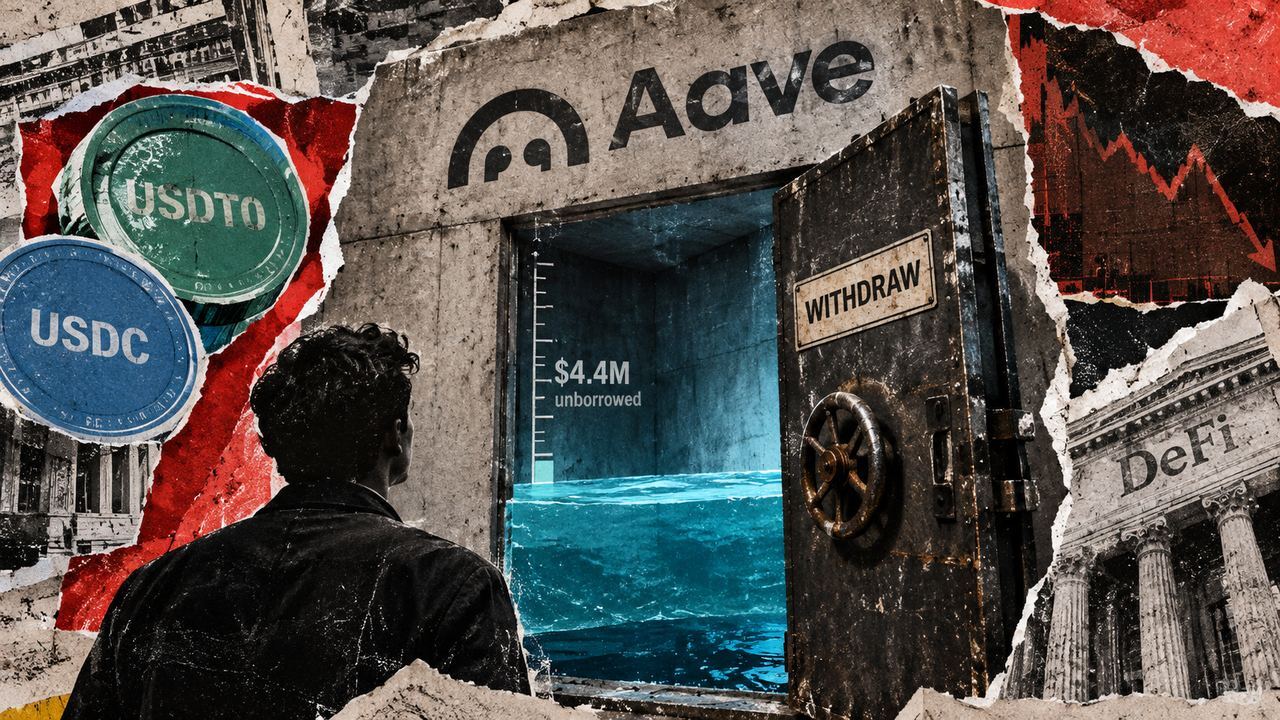
Aave Pool Shows 6.1% APR But Only 4.4M USD Withdrawable
Aave’s Monad USDT0 pool shows a 6.1% APR but only $4.4M is available for withdrawals. This liquidity mismatch warns operators that high yields often correlate with reduced exit capacity, requiring careful management of crypto prices and market risk.
Ethereum Accumulation Phase: The $10k Thesis
Ethereum is in a potential accumulation phase. Analysts point to a $1,000-$1,350 support floor. If ETH holds this zone, it targets $10,000 by 2027. Breaking $3,945 is the immediate signal. We track these crypto prices daily.
WTO Data Shows Fragmented Crypto Regulation Capping Stablecoin Usage At 3 Percent
WTO director states fragmented crypto regulation limits stablecoin adoption to just 3% of global payments. Despite 35-fold growth in cross-border usage since 2020, only 39% of jurisdictions have finalized frameworks. Regulatory clarity is the next major catalyst for institutional DeFi integration and cross-border settlement efficiency.
Binance Hijacks Hyperliquid Revenue: The HYPE Risk
Binance is eating Hyperliquid's lunch. By taking 50% of tokenized stock perp volume, the CEX threatens the revenue funding HYPE buybacks. Alice Liu warns this structural shift could break the bullish narrative. We track the on-chain leakage and assess the real risk to your portfolio now.
AI Trading Bots 2026: The End of Manual Chart Watching
AI trading bots are evolving beyond simple rule-based execution. In 2026, platforms like MillionPool offer managed quantitative strategies for crypto and stocks. This shifts the meta from active chart watching to passive strategy selection, reducing human error and emotional trading decisions for retail investors.
Akash Kumar Jha
First-person Web3 researcher and finance analyst-operator sharing scars, receipts, and protocol breakdowns. Tracking institutional flows, DeFi mechanics, and on-chain alpha.