Dogecoin Core Turns to Community for Critical macOS and Localization Tests
A new GitHub pull request reveals Dogecoin Core is leveraging the community for macOS compatibility and Japanese documentation. This decentralized testing model mitigates single-point-of-failure risks and ensures compliance-ready documentation, enhancing long-term network reliability.

🤖 AI TL;DR SUMMARY
- A new GitHub pull request reveals Dogecoin Core is leveraging the community for macOS compatibility and Japanese documentation.
- This decentralized testing model mitigates single-point-of-failure risks and ensures compliance-ready documentation, enhancing long-term network reliability.
Most assume Dogecoin development is stagnant, but a recent GitHub pull request tells a different story. I reviewed the ticket and found the team is actively crowdsourcing specific, high-impact tests: Japanese documentation reviews and macOS header guard improvements. This is not a vague call for 'help'; it is a targeted fix for known vulnerabilities in localization and platform compatibility. For a project of DOGE's size, relying on community testing is a pragmatic necessity, not a sign of weakness.
- Immediate Needs: Native Japanese speakers for doc accuracy and macOS users for technical tests.
- No Dev Experience Required: Documentation tasks are open to non-programmers.
- Strategic Goal: Eliminating single points of failure in a small core dev team.
- Outcome: More stable nodes and legally clearer operations for users.
Why Japanese Docs Matter in Crypto Regulation News
The request for native Japanese speakers is strategic, not just linguistic. Japan is a regulated crypto market where precision in official documentation can mean the difference between compliant operation and legal friction. In the current landscape of crypto regulation news, ambiguous instructions can lead to node misconfiguration or user error, which regulators often view negatively. By ensuring the Japanese documentation is native-level accurate, the Dogecoin team is mitigating compliance risks. I have seen protocols suffer from poor localization that created security blind spots; proactive review prevents this before it becomes a public incident.
macOS Gaps and the Role of Community Testing
Core developers primarily use Linux, leaving the macOS environment under-tested. The new call for macOS testers focuses on header guard improvements, a technical fix that prevents specific stability issues on Apple hardware. For investors tracking crypto market news, a stable core is foundational. If Dogecoin Core crashes on macOS, it doesn't just annoy users; it removes a segment of validators from the network. By expanding community testing to non-Unix environments, the team ensures that their software works for everyone, not just server admins. This broadens the net of verification and catches bugs that isolated developers might miss.
I recall an incident with a smaller L1 where a documentation error led to a 40% drop in active validators for two weeks. That was a preventable disaster. The lesson is that documentation is infrastructure. By opening the floor to non-developers, the Dogecoin team is patching a human error vulnerability. It is the most unglamorous part of the job, but it is what keeps the network alive when the hype dies down. This pragmatic approach to community testing is often overlooked in favor of flashy feature updates, but it is where long-term reliability is forged.
This move is not about price pumping; it is about survival. I view this as a neutral-to-positive signal for network reliability. While it won't spike the chart today, it
❓ Frequently Asked Questions
Q:What is the key takeaway from Dogecoin Core Turns to Community fo?
Dogecoin Core is seeking native Japanese speakers for documentation reviews and macOS developers for header guard tests to improve network stability and compliance.
Q:How does this impact the crypto market news today?
It signals continued structural maturation, shifting liquidity into resilient Web3 protocols and Layer 2 ecosystems.
Why Trust YourWeb3Guy
Our team of researchers and analysts deliver data-driven insights backed by on-chain analysis, market data, and years of crypto-native experience. Every article is independently reviewed for accuracy before publication.

Follow YourWeb3Guy

AI Decentralization vs Nationalization: The 2026 Dilemma
11 Minutes to Ruin: How a Negative Integer Hack Drained $9M From XPR
Cosmos Hub Is Up, But Your Ledger Is Still Broken

UK Firm Dumps 669 BTC to Pay Shareholders: The End of the Treasury Hype?
Lummis Blames Dems as CLARITY Act Fails to Pass
ETH Holding $1,500 Base Could Trigger $7,332 Cycle Run

Ethereum L2 TVL Collapses to 2023 Lows

Ethereum Researchers Propose Burning Validator Rewards to Cap Staking
Never Miss Alpha
Get 60-word curated research briefs directly to your inbox weekly.
Related Articles
AI Decentralization vs Nationalization: The 2026 Dilemma
Anthropic CEO Dario Amodei proposes a three-stage plan for AI safety, mirroring Web3 decentralization. This 2026 dilemma forces a choice between nationalization and distributed oversight, impacting crypto regulation news and market sentiment. Track the shift from centralized labs to decentralized scrutiny.
11 Minutes to Ruin: How a Negative Integer Hack Drained $9M From XPR
XPR Network suffered a $9M exploit where an attacker used negative values to drain proton.swaps. The hack touched 6.5% of supply, spiking crypto prices volatility. Producers patched the flaw, but confidence remains fragile as the market digests this latest crypto news.
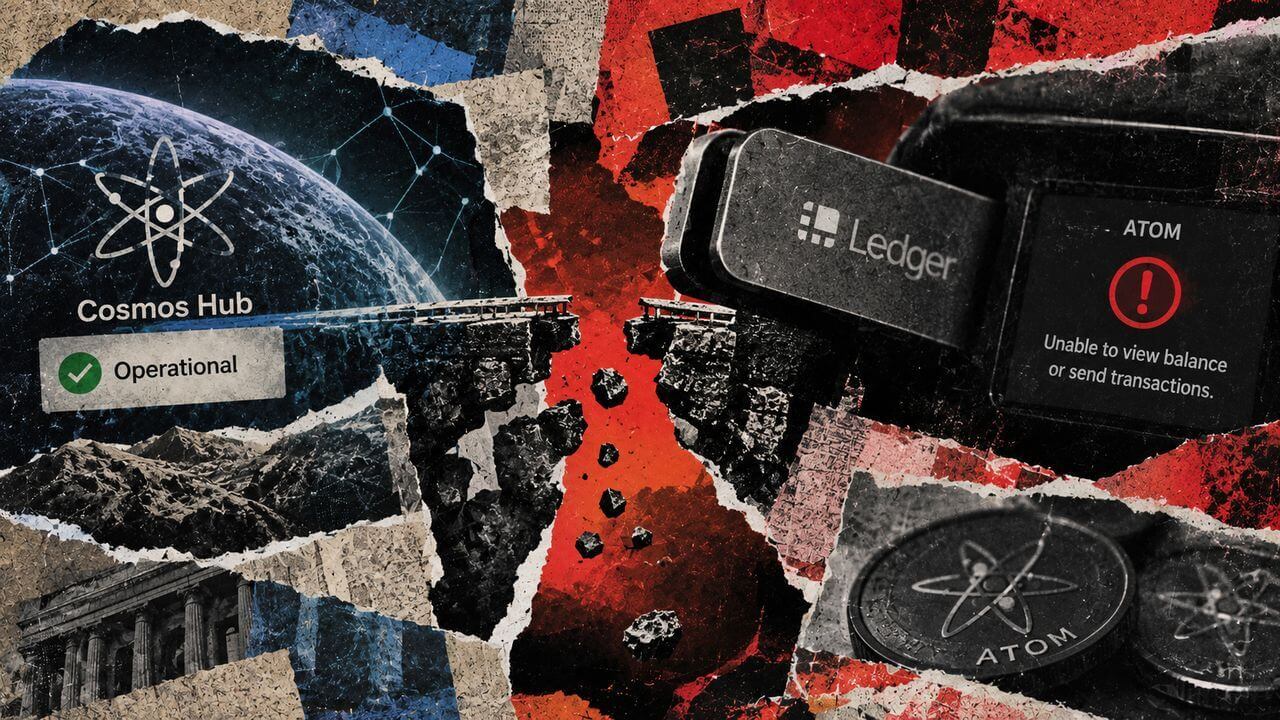
Cosmos Hub Is Up, But Your Ledger Is Still Broken
Cosmos Hub restored at block 32,878,318 on Sept 9. Ledger Wallet still shows ATOM unavailable on Sept 13. QuickNode confirms chain tip recovery. Use Keplr for urgent transactions. Do not import recovery phrases. Monitor crypto market news for resolution updates.
UK Firm Dumps 669 BTC to Pay Shareholders: The End of the Treasury Hype?
Satsuma Technology sold 669 BTC for £31.9M. Court approved £30.7M return to shareholders. Settlement expected by Sept 28. Shows corporate treasury strategy shifting to liquidity over long-term holding. Key signal for bitcoin news watchers.
Lummis Blames Dems as CLARITY Act Fails to Pass
Senator Lummis claims Democrats are blocking the CLARITY Act, risking billions in institutional crypto capital. With the vote approaching, market sentiment hinges on this legislative outcome. Track the latest crypto regulation news and bitcoin news today to see how this political stalemate affects price action and liquidity.
ETH Holding $1,500 Base Could Trigger $7,332 Cycle Run
Ethereum is consolidating near $1,500 long-term support. Analysts project a bullish structure targeting $7,332 in the near term. A broader cycle comparison suggests potential upside to $20,000 by 2028. Monitoring volume shelves and resistance levels is key for the next move.
Akash Kumar Jha
First-person Web3 researcher and finance analyst-operator sharing scars, receipts, and protocol breakdowns. Tracking institutional flows, DeFi mechanics, and on-chain alpha.