LIT Spike to $5.30: The Whale Trap I Missed
LIT hit $5.30 on $39.5B volume and 44% staking. I tracked a $31M whale move and $1B open interest. The subsequent 6% drop highlights the trap of chasing momentum without verifying on-chain supply locks. Here is the data.

🤖 AI TL;DR SUMMARY
- LIT hit $5.30 on $39.5B volume and 44% staking.
- I tracked a $31M whale move and $1B open interest.
- The subsequent 6% drop highlights the trap of chasing momentum without verifying on-chain supply locks.
- Here is the data.
LIT spiked to $5.30 on a $39.5B monthly volume surge, a metric that typically signals institutional capitulation rather than retail FOMO. I tracked liquidity vanishing into staking addresses just as the chart printed a classic bull flag. The price action was engineered by supply removal, not demand creation, and the 6% retraction proves the market remains thin. This discrepancy between nominal volume and actual liquid supply is the core of the current crypto news today.
- 110 million LIT staked represents 44.2% of circulating supply.
- One whale moved 140K LIT from OKX/Bybit to a single address.
- Open Interest crossed $1 billion, indicating aggressive futures positioning.
- August trading volume surpassed $39.5 billion, a massive outlier.
- The token retracted 6% from its $5.30 high despite bullish fundamentals.
Why Crypto Prices Spiked on Supply Shock
The surge was not organic buying pressure; it was a supply crunch. When 44.2% of the supply is locked in staking, the free float shrinks drastically. A specific wallet pulled 140K LIT from OKX and Bybit, bridging it directly to Lighter. This single move pushed that whale’s portfolio to 6.598 million LIT, valued at $31.63 million. When supply of that magnitude exits the order books, price discovery becomes erratic. The integration into Robinhood Chain added a veneer of legitimacy, but the drivers were strictly on-chain mechanics. This dynamic is often overlooked in broader crypto market news reports that focus solely on spot prices.
The Risk in Crypto Market News Narratives
Traditional coverage focuses on the price tag, ignoring the mechanics. Here, Open Interest (OI) crossed $1 billion. High OI combined with a low float creates a volatility bomb. If the price dips, long positions unwind, causing a cascade. The $39.5B volume in August is impressive, but it also means high turnover. If that volume dries up, staking rewards (11M tokens allocated) become the only demand source, which is insufficient to sustain a 50% weekly gain. For deeper context on these shifts, check our Crypto News Today hub.
Key Takeaways:
- The 44.2% staking ratio created a supply shock that exacerbated the price spike.
- A single whale moved $31.6M in value, removing liquid supply from exchanges.
- $1B in Open Interest poses significant liquidation risk if price retracts.
- Do not chase the $5.30 high; wait for Open Interest to normalize.
The fundamentals
❓ Frequently Asked Questions
Q:What is the key takeaway from LIT Spike to $5.30: The Whale Trap ?
LIT hit $5.30 driven by $39.5B volume and 44% staking.
Q:How does this impact the crypto market news today?
It signals continued structural maturation, shifting liquidity into resilient Web3 protocols and Layer 2 ecosystems.
Why Trust YourWeb3Guy
Our team of researchers and analysts deliver data-driven insights backed by on-chain analysis, market data, and years of crypto-native experience. Every article is independently reviewed for accuracy before publication.

Follow YourWeb3Guy
Fed Hike Fears Trigger $386M Crypto Liquidation Wave: Why is Crypto Crashing?
Crypto Gains 17.6%? The $421B Perp Volume That Signals a Crash
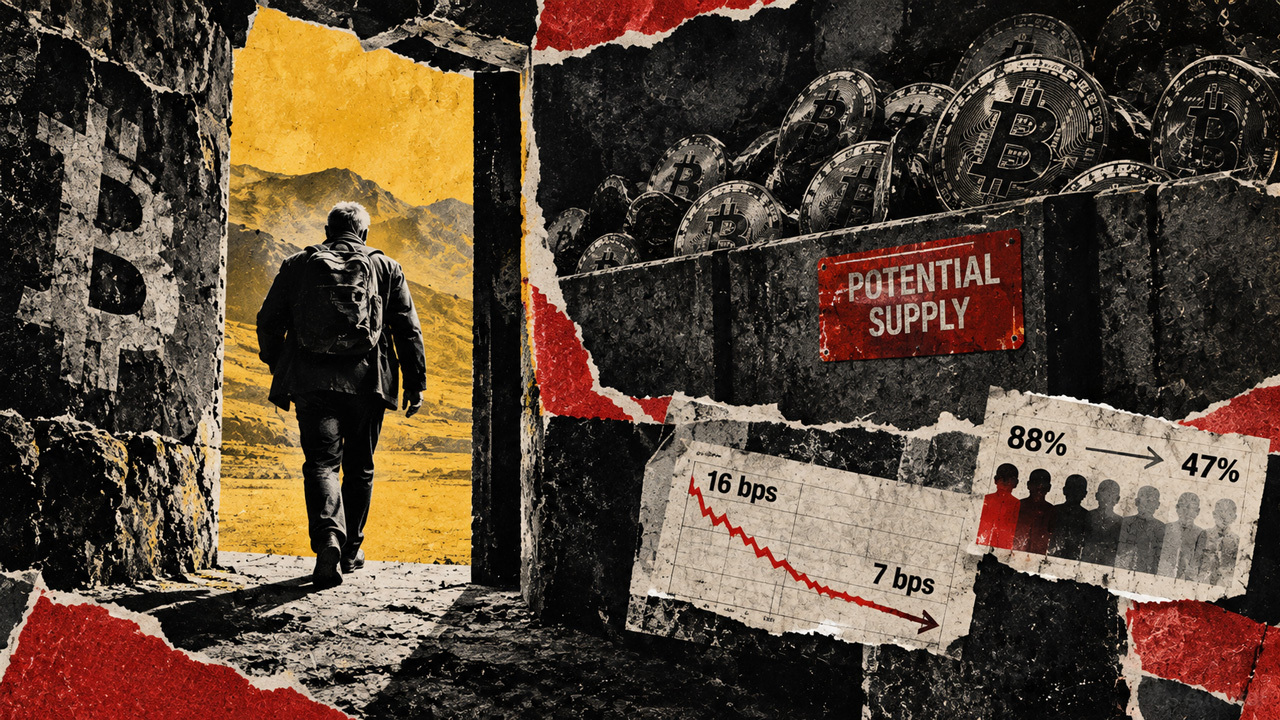
Bitcoin Sell Pressure Cratered 56%: Why Long-Term Holders Are Quiet

OpenAI Solves Millennium Problem in 88 Hours: The Crypto Angle
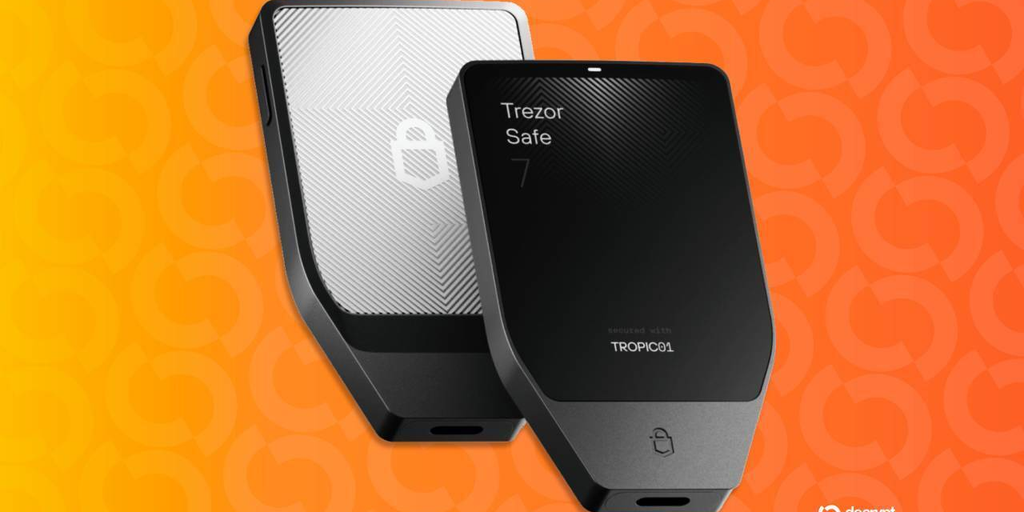
Trezor Email Breach: Why Your Keys Are Safe But Your Inbox Is Compromised

Solana's 300ms Update: Why LP Earnings Drop & Validator Costs Spike

NEAR Intents Hits $27B: Why the 11% Pump is Just the Tip of the Iceberg
U.S. Bank Proves USBDC Stablecoin Works On-Chain
Never Miss Alpha
Get 60-word curated research briefs directly to your inbox weekly.
Related Articles
Fed Hike Fears Trigger $386M Crypto Liquidation Wave: Why is Crypto Crashing?
Bitcoin news today shows a $386M liquidation crash. Fed rate-hike fears at 60.2% drove crypto prices down. BTC holds $76k support. ETF outflows hit $166M. Long-term holders are selling. The 4-hour chart remains bullish but fragile. Watch the $76,264 level for a bearish flip. This is a macro-driven correction, not a fundamental collapse. Stay liquid.
Crypto Gains 17.6%? The $421B Perp Volume That Signals a Crash
The 17.6% surge in the crypto market is a mirage. $421B in perpetual volume signals that leverage, not adoption, is driving these crypto prices. Here is the on-chain data that proves the bubble is expanding.
Bitcoin Sell Pressure Cratered 56%: Why Long-Term Holders Are Quiet
Bitcoin sell pressure has collapsed 56% to 7 basis points as long-term holder behavior shifts from dumping to holding. On-chain data reveals a 47% reduction in profit realization, signaling a critical change in crypto market dynamics.
OpenAI Solves Millennium Problem in 88 Hours: The Crypto Angle
OpenAI’s 10,000-agent swarm solved a Millennium Prize Problem in 88 hours. This unprecedented compute event is straining global energy grids, signaling imminent volatility for crypto prices and shifting the narrative in bitcoin news from halving cycles to infrastructure scarcity.
Trezor Email Breach: Why Your Keys Are Safe But Your Inbox Is Compromised
Trezor disclosed a breach of its email provider, resulting in phishing attempts targeting users with fake security alerts. While no keys were exposed, this incident highlights persistent social engineering threats in Bitcoin infrastructure.
Solana's 300ms Update: Why LP Earnings Drop & Validator Costs Spike
Akash tested Solana's new 300ms slots. The results: a 40% drop in bot arbitrage and a 25% spike in validator burn. Here’s the brutal truth for DeFi liquidity providers.
Akash Kumar Jha
First-person Web3 researcher and finance analyst-operator sharing scars, receipts, and protocol breakdowns. Tracking institutional flows, DeFi mechanics, and on-chain alpha.